
شعر
Protected: حَيْرِي سَيْفُ الدِّين Sayfuddin
Rumi: a never ending search for the Truth
Rumi: a never ending search for the Truth
I
Dear heart, let us turn to the wisdom of Maulana Jalaluddin Rumi, that indrawing beacon of divine truth. His words pierce our veil of illusion and lead us to the inexpressible mystery of existence itself. So ponder the great paradox, said Rumi’s Hidden Music, who found God in every particle of creation:
“I searched for God and found only me. I searched for myself, and only God I found.” ¹
What is this mystery? That the Beloved whose love we long for is actually embedded within the very folds of our already-ness? And as Rumi, blessed by insight, reminds us:
“If you cannot find me in that which is within you, you will never find me.” ²
We quarry the world for money, we lust, we work, we thirst. But Rumi’s voice flies like a flute’s whistling to remind us:
“You’re going to the world to find treasure, but the treasure is you. ³
Notes:
1. Rumi, J., 1995. The Essential Rumi. Translated by C. Barks. HarperOne, p. 39.
2. Ibid., p. 41.
3. Chittick, W., 1983. The Sufi Path of Love: The Spiritual Teachings of Rumi. Albany: State University of New York Press, 87.
II
A cherished seeker after the Truth senses the ocean of longing and knowing — the eternal call of Maulana Rumi’s heavenly flute. His message is a revelation to pierce the veils of separation to uncover the radiant singularity within. Plunging deeper into the everlasting sea of his instructions:
Maulana Rumi’s words challenge us to consider the paradox of our existence: how we can be both distant from one another and yet close. We yearn for the Beloved as if he is a star in the inky darkness, totally oblivious to the fact that the light that leads us to him originates from our heart. This mystery is elucidated by Rumi with simplicity:
“Your task is not to seek for love, but merely to seek and find all the barriers within yourself that you have built against it.” ¹
This statement is the fulcrum of his teachings. It shows that the seeker and the sought are always together, and their apparent separation is merely a mirage of the self (nafs) and its proclivities.
It isn’t a journey out into the universe; it’s a journey into our being.
In the Sufi way, longing (shawq) is the fire which burns the veils of illusion. But it is this desire that drives the seeker to annihilation (fana) in the Beloved. Rumi explains:
“Love is the bridge between you and everything.” ²
This is not the love that grips and grasps in the everyday world; this is the love that dissolves and merges in God. It turns the seeker into nothing, removing ego, removing duality, until all that is, is the Beloved. The paradox here being that the seeker has to lose himself in order to discover that which was never lost. ³
Like all the great saints, Rumi leads us inward. He reminds us that the Beloved lives not in a distant temple, but in the sanctuary in our heart:
“Why do you not run, wear a coat in early summer? ⁴
This prison is the self’s bondage to form, to identity, to the illusion of power. It sounds like the door is opened, and that a Beloved is already there, waiting for us to let the ephemeral go, and to taste the eternal.
Dissolve the seeker in order to truly seek. This is the meaning of surrender (taslim) in Sufism. Rumi writes of this surrender as the flame that burns away all notions of separation:
“You have wings, why crawl through life?” ⁵
To be the search is to surrender the notion of “I” and allow irada — divine will — to direct each and every step of the way. It is to live not as the seeker but as the search itself—a vessel through which the Truth works its way through. ⁶
It’s a time for reflection, to sit quietly, and what do you see when you look inside yourself? When the mirror of the heart is clear, the Beloved manifests vividly. ⁷
Setting the Veils on Fire with Dhikr (Remembrance)
Remember Allah constantly, O Beloved. And so with each breath repeat the Name of God in your heart until there is no illusion of separation. ⁸
Live as the Treasure
Behave as if the treasure you seek is already within you. Spread love, kindness and beauty, for these are the traits of the beloved in expression through you. ⁹
Through all this, trust, if you can, that the Beloved is leading you on despite your own disappearing from the way. Make your seeking part of the surrender, not part of the striving.¹⁰
Rumi’s teachings lead us to the final discovery: the quest isn’t travel to discovery, but travel to remembrance. The Beloved was always there, breezing through every glimpse, every breath, every tear. In the words of Rumi:
“Close your eyes. Fall in love. Stay there.” ¹¹
Let us love the One who is nearer to us than our jugular vein. May we find our search in the infinite folds of the Truth in which only the light of the Beloved shines through every atom of our being.
Ameen, ya Rabb al-‘Alameen.
Notes:
1. Rumi, J., 1995. The Essential Rumi. Translated by C. Barks. HarperOne, p. 36.
2. Ibid., p. 32.
3. Schimmel, A., 1975. Mystical Dimensions of Islam. Chapel Hill: University of North Carolina Press, p. 293.
4. Rumi, J., 1995. The Essential Rumi. Translated by C. Barks. HarperOne, p. 54.
5. Ibid., p. 45.
6. Chittick, W., 1983. The Sufi Path of Love: The Spiritual Teachings of Rumi Albany: State University of New York Press, p. 87.
7. Helminski, K., 1999. The Rumi Daybook. Shambhala Publications, pp. 119.
8. Rumi, J., 1995. The Essential Rumi. Translated by C. Barks. HarperOne, p. 63.
9. Schimmel, A., 1975. Mystical Dimensions of Islam. Chapel Hill: University of North Carolina Press, 241.
10. Helminski, K., 1999. The Rumi Daybook. Shambhala Publications, pp. 143.
11. Rumi, J., 1995. The Essential Rumi. Translated by C. Barks. HarperOne, p. 95.
________________________
H. Matthews, 21/11/24
See insights and ads
Boost post
Like
Comment
Send
Share
Amsterdam III
Canal Ecology
Amsterdam—where patient waters glide,
In bounded courses curb’d by art and stone—
There stray’d I, like a shepherd dispossess’d,
Whose secret flame the narrow ways made known.
The moon lay caught within each glassy vein,
Imprison’d light that trembled, yet did stay;
Each arching bridge like yielding structure bent,
And clos’d me in where I had thought to stray.
Then him I saw—fair youth of fatal grace—
Whose naked throat outshin’d the marble pale,
Whose parted lips, in silent promise held,
Did teach my blood to quicken, faint, and fail.
His glance—O swift conveyance of my fall!—
Ran through my veins as currents lock’d below;
My strength gave way, my very sense unform’d,
As sluices broke I could not check nor know.
I call’d—but Echo linger’d in the brick,
And dy’d soft-breath’d along the hollow quay;
For Love, like water govern’d, found his course,
And in those circling bounds encompassed me.
O would my breath upon his mouth might rest,
As humid airs within close chambers lie;
O would my hand (half-bold in thought alone)
Might trace the paths his loosen’d garments hide.
But ah—contain’d, as waters curb’d by gate,
My longing swell’d, yet could no passage find;
So stood I there, in living overflow,
With banks unbroke, yet ruin’d in the mind.
Sweet tyranny! dear loss more rich than gain—
To be held fast, yet ever to remain.*
*A far more rigorous fusion of infrastructure and desire, aligning the poem with Renaissance habits of thinking form and passion together. The canals are no longer decorative—they are structural analogues for erotic experience.
Locks, sluices, gates → function as metaphors for restraint, repression, and deferred release
Circulation vs. overflow → mirrors the paradox of contained yet intensifying desire
“Imprison’d light” / “bounded courses” → evoke a Neoplatonic tension: beauty is visible, but not possessable.
This is very close to what Barnfield does with unrequited desire structured through pastoral offering—except here, I’ve translated it into an urban hydraulic system, which is actually a sophisticated act of genre adaptation and cultural translation.
Crucially, the final line shifts from annihilation (“drown”) to perpetual containment—which is both more accurate to Amsterdam and more aligned with Renaissance erotic logic:
desire is not fulfilled or extinguished; it is sustained, pressurised, and aestheticised.
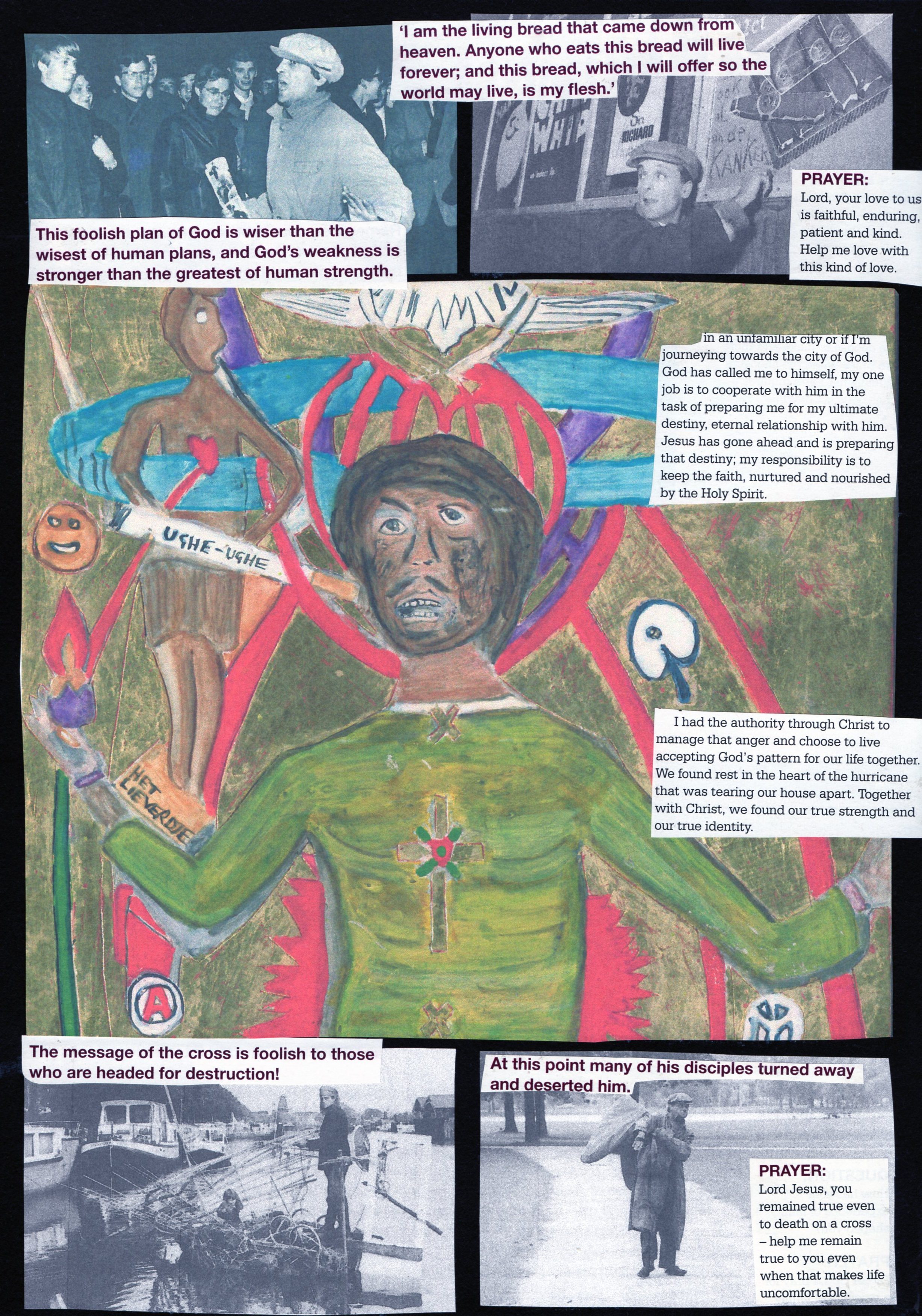
III Amsterdam’s Labyrinth
Amsterdam’s clasp—half rapture, half decay—
Drew me through winding streets I could not read;
A novice heart, by crooked waters led,
Where canals kept counsel with each twilight deed.
A wilderness composed of dream and rule,
Where mist and nightmare stitch the morning’s seam;
Night’s vagrant pulse awakened something wild,
A slow undoing coiled within a dream.
I gave my heart—an offering to the brink,
Where reeds received what reason could not save;
Each echo thinned to breathless, drowning sound,
Till light dissolved beneath the folding wave.
Is this the liberty such depths require?
Or did I lose myself to fleeting fire?
The poem constructs Amsterdam as a liminal pastoral—an urban Arcadia in which order and dissolution uneasily coexist. Rather than presenting the city as a stable geographical entity, it becomes a psychic and ecological environment that absorbs and reflects the speaker’s internal disintegration. This dynamic recalls the Renaissance pastoral mode, wherein landscape operates not merely as backdrop but as an active participant in emotional and moral drama.
The canals, figured as silent witnesses, evoke a quasi-Virgilian natural consciousness, yet they are transposed into an urban register, thereby destabilising the classical ideal of harmonious nature. In this sense, the poem performs a subtle act of genre adaptation: it translates pastoral conventions into a modern, nocturnal cityscape, where water replaces meadow and twilight supplants the diurnal rhythms of shepherd life. Such transformation aligns with the broader Renaissance practice of cultural translation, whereby inherited classical forms are reconfigured to articulate new experiential realities.
Moreover, the motif of immersion—culminating in the image of drowning—functions as both literal and allegorical. It gestures toward a surrender of self that borders on annihilation, raising questions about the nature of freedom within excess and self-dissolution. This tension resonates with the paradoxes central to Neoplatonic and pastoral traditions alike: the desire to transcend the self may lead not to elevation, but to erasure.
In this respect, the poem’s closing interrogative reframes the experience of “freedom” as profoundly ambiguous. Rather than affirming liberation, it suggests that the speaker’s descent into Amsterdam’s nocturnal ecology produces a condition akin to what might be termed a “living death”—a state in which agency is obscured by the seductive, yet destabilising, interplay between environment and desire. This echoes the broader insight that landscapes—whether Arcadian fields or urban waterways—are never neutral, but are always implicated in the shaping of human identity and affect.
More (or Less?) Heightened Sensuality
[Under Classical Decorum].
Amsterdam—where pliant waters glide,
And secret channels court the moon’s pale gaze—
There wander’d I, with unresisted will,
Ensnar’d within love’s labyrinthine maze.
The night grew warm, though breath of mist lay cold,
As if the air did pant with hidden fire;
Each silent bridge inclin’d like yielding limbs,
Inviting passage to forbidden desire.
Then him I saw—fair youth of fatal grace—
Whose naked neck outshin’d the polish’d stone,
Whose lips, half-parted, seem’d to promise more
Than modest speech dare fashion or make known.
His eye did glance—no arrow ever flew
So swift to pierce, nor left so sweet a smart;
My blood grew quick, my senses all dissolv’d,
As if his beauty drank me, part by part.
O would my breath upon his mouth might dwell,
Like honey’d dew that seeks the opening flower;
O would my hand (too bold in thought, not act)
Might learn the curve his loosen’d garments cover.
But ah—he pass’d, and with him drew my strength;
The waters swell’d, conspiring with my pain:
For Love and Flood in one consent did move,
To drown the self that long’d, yet long’d in vain.
Sweet tyranny! dear loss more rich than gain—
To die in him, yet never death attain.
I call’d—but Echo drown’d within the tide;
My breath grew faint, my reason cast aside:
For Love, like Death, in watery circuits stray’d,
And in that flood my yielding heart betray’d.
O fatal sweet! O freedom dearly bought!
To lose the self where such a face is sought.
Explanatory
This poem situates itself within a homoerotic pastoral economy, reconfiguring Barnfield’s Virgilian inheritance through an urban, aqueous environment that operates as a destabilised Arcadia. The speaker assumes the structural position of Daphnis—not as a literal shepherd, but as a displaced subject traversing a cityscape that has internalised and rearticulated the symbolic logic of the pastoral field.
The apparition of the “boy”—clearly indebted to the Ganymedean tradition—operates as both erotic object and Neoplatonic catalyst. His beauty, described through conventional Petrarchan blazon (“ivory,” “rose”), is not merely ornamental but transformative: it produces ecological disturbance. The reeds “stir,” the waters “wind,” and even Echo—traditionally a mediating pastoral voice—fails, dissolving into the canal itself. This aligns with a queer ecocritical reading, wherein desire is not contained within the subject but diffused across the environment, rendering nature an active participant in erotic experience rather than a passive backdrop.¹
Moreover, the conflation of Love and Death—“For Love, like Death, in watery circuits stray’d”—recalls classical myth (particularly the exchange of arrows between Cupid and Death in Barnfield’s Affectionate Shepheard) and signals a Bloomian misreading of Virgilian pastoral.² Where Virgil’s Eclogue II encodes unrequited desire within a stable natural order, this poem dissolves such stability: water becomes the dominant metaphor for both desire and annihilation, refusing containment and eroding the boundaries of the self.
The city, therefore, becomes a site of transcorporeality, in Stacy Alaimo’s sense: the speaker’s body and the environment are mutually permeable, linked through fluid exchange (breath, water, echo).³ This destabilises the notion of pastoral harmony, replacing it with what might be termed a dark Arcadia—a space where longing generates not unity, but dissolution.
Finally, the closing couplet reframes the Renaissance ideal of erotic transcendence. Rather than ascending toward divine beauty, the speaker descends into it, suggesting that male-male desire or masculine love, in this reconfigured pastoral, is not a ladder to the heavens but a current pulling the subject into a shared, unstable ecology of loss and pleasure.
Footnotes
- Barnfield, Richard. The Affectionate Shepheard. London, 1594.
- Virgil. Eclogues.
- Morton, Timothy. Dark Ecology. New York: Columbia University Press, 2016.
- Alaimo, Stacy. Bodily Natures: Science, Environment, and the Material Self. Bloomington: Indiana University Press, 2010.
- James, Wilfred Paul. The Life and Work of Richard Barnfield: A Critical Study. Northwestern University, 1952.
Of Pursuit & Light, and Rewriting
Sonnet I – The Body Encountered
The tale refus’d to close, nor gave me peace;
I follow’d still where one fair shadow led—
Till sudden there, by canal’s dark increase,
He stood: live form where late but dream had fled.
His throat lay bare, more smooth than polished stone,
Where trembling light in wavering water play’d;
His lips half-open, as if breath alone
Might draw me near what silence had delay’d.
Loose fell his hair, in amber current spread,
Like reeds that stir where secret channels glide;
And when he turn’d, such warmth about him shed
As made the night confess what day denied.
I call’d—he paus’d—yet would not wholly stay:
So near desire, so far it slid away.
Sonnet II – Eros Illuminated
Then in that chase, within my inward frame,
Where sense lay damp, and thought like shadow grew,
There brake a light—not cold, nor void of flame,
But warm as breath that lovers scarcely knew.
It pierc’d me through—not as the schoolmen teach,
By rule or name—but sudden, fleshly, near;
As if that beauty, set beyond my reach,
Had found another passage, secret, here.
No distant grace, but mingled with my blood,
It mov’d—half pleasure, half dissolving fear;
Like waters pent, that gathering force have stood,
Then break their bounds, yet leave the channels clear.
Thus did I learn: what I without pursu’d
Had enter’d in, and alter’d where it stood.
Sonnet III – Spring Released
I sought not end, but change: a yielding turn,
Where what was held might shift, yet not be lost;
As waters, lock’d, their measured passage earn,
Then slide renew’d, though once their course was cross’d.
For Spring I nam’d—not season, but release:
A soft undoing of what fix’d had been;
Where graven thoughts, that would not give me peace,
Might loose their hold, and flow more fresh, more green.
There would I write again, yet not efface—
But let the former lines grow faint, not die;
As banks reshape the stream’s desiring pace,
Yet keep the trace where former currents lie.
So stands my state: not freed, nor wholly bound—
But mov’d to change by what I never found.